Character animation / rigging field notes[email protected]

A technical workbook for living characters

Build the spine, then find the performance.

Motion Spine links character animation and rigging through observable choices: readable joint chains, dependable deformation, understandable controls, and shot tests that invite revision.

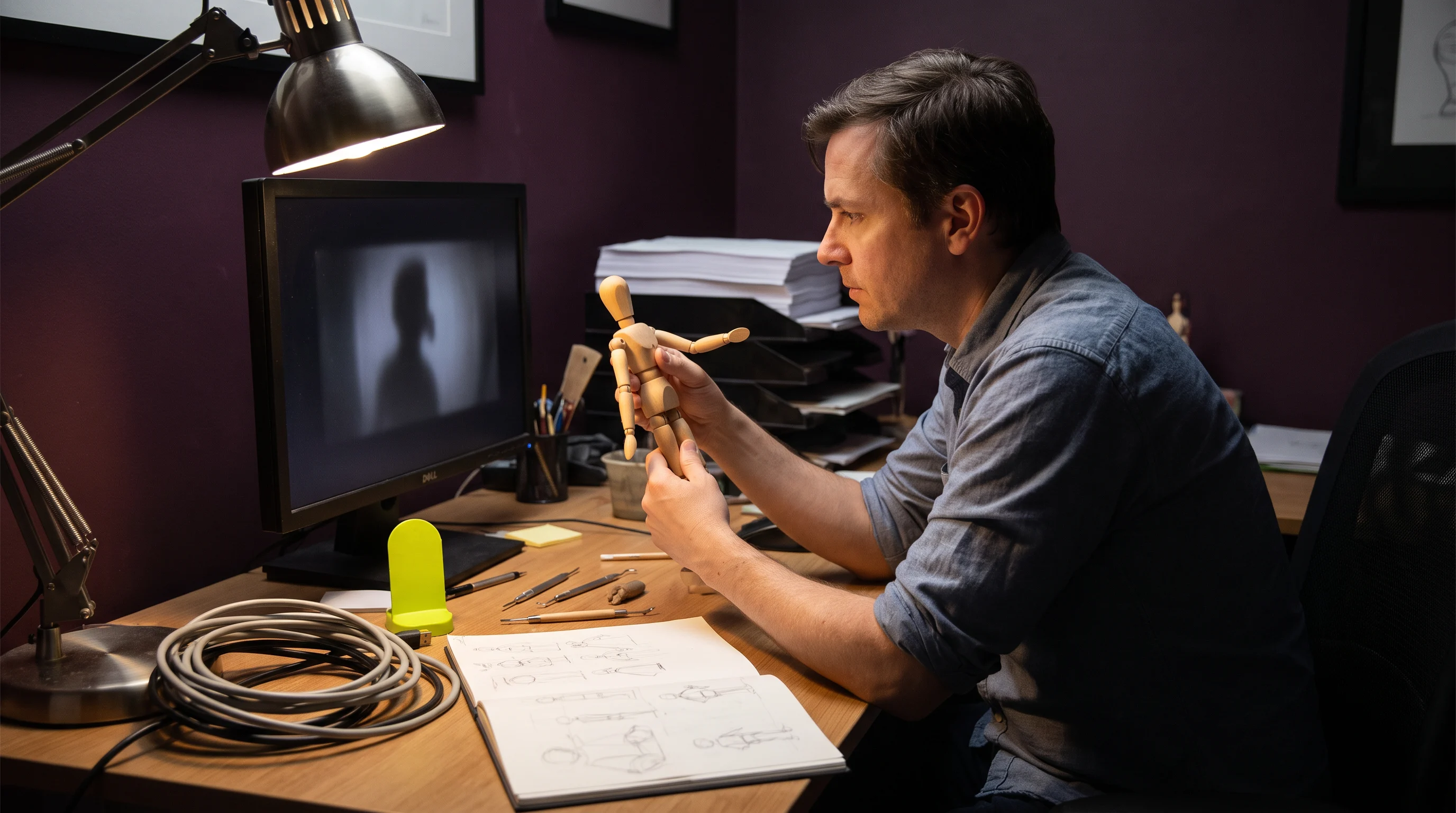
Animator adjusting a small character maquette in a low-lit studio
The hand-built reference stays visible: a rig exists to support a decisive pose.
01 / anatomyjoint chain logic
02 / carerig hygiene habits
03 / testshot-level checks
04 / reviseclear iteration notes
01 — orientation

A character is a chain of choices, not a stack of parts.

This workbook treats a rig as a shared language between the person making a pose and the person maintaining the system beneath it. Start from motion, identify the load-bearing relationships, and keep each decision legible to the next pair of hands.

Use the modules in order or enter at the fault you can currently observe: a joint, a control, a shape, an unclear note, or a shot that refuses to read.
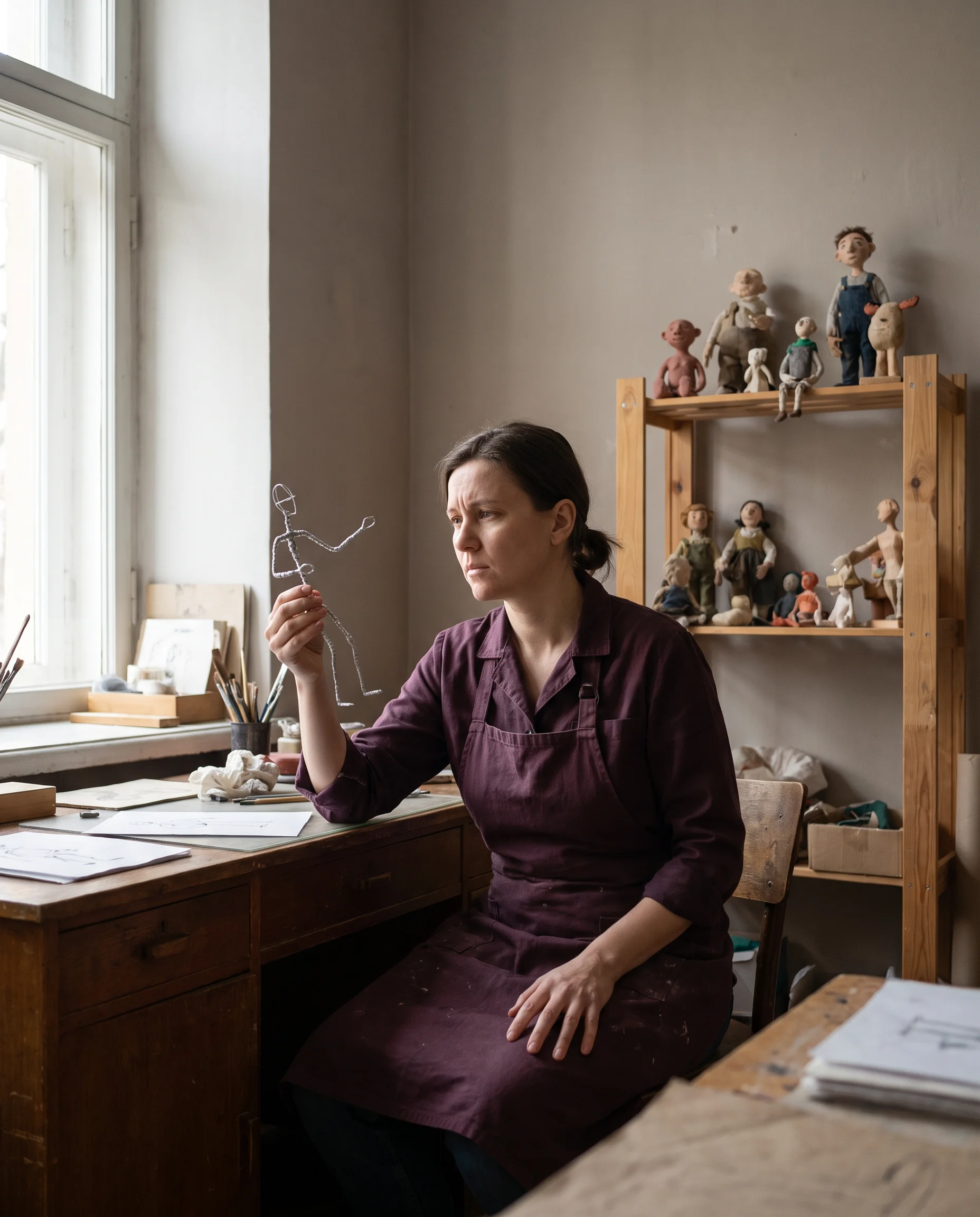
Animator studying a wire armature beside handmade puppet maquettes
Looking closely is part of the build.
intent / headweight / hipcontact / foot
02 — joint-chain map

Map influence before you name a controller.

A useful chain makes its dependencies visible. Follow energy from a contact point through the body rather than treating every joint as an isolated dial.
  1. 01Locate the action.
    Where does force arrive, and where must the viewer feel it travel?
  2. 02Mark the counterweight.
    Identify the mass that answers the action before tuning secondary motion.
  3. 03Protect the silhouette.
    Keep the relationships that describe intent understandable at a glance.
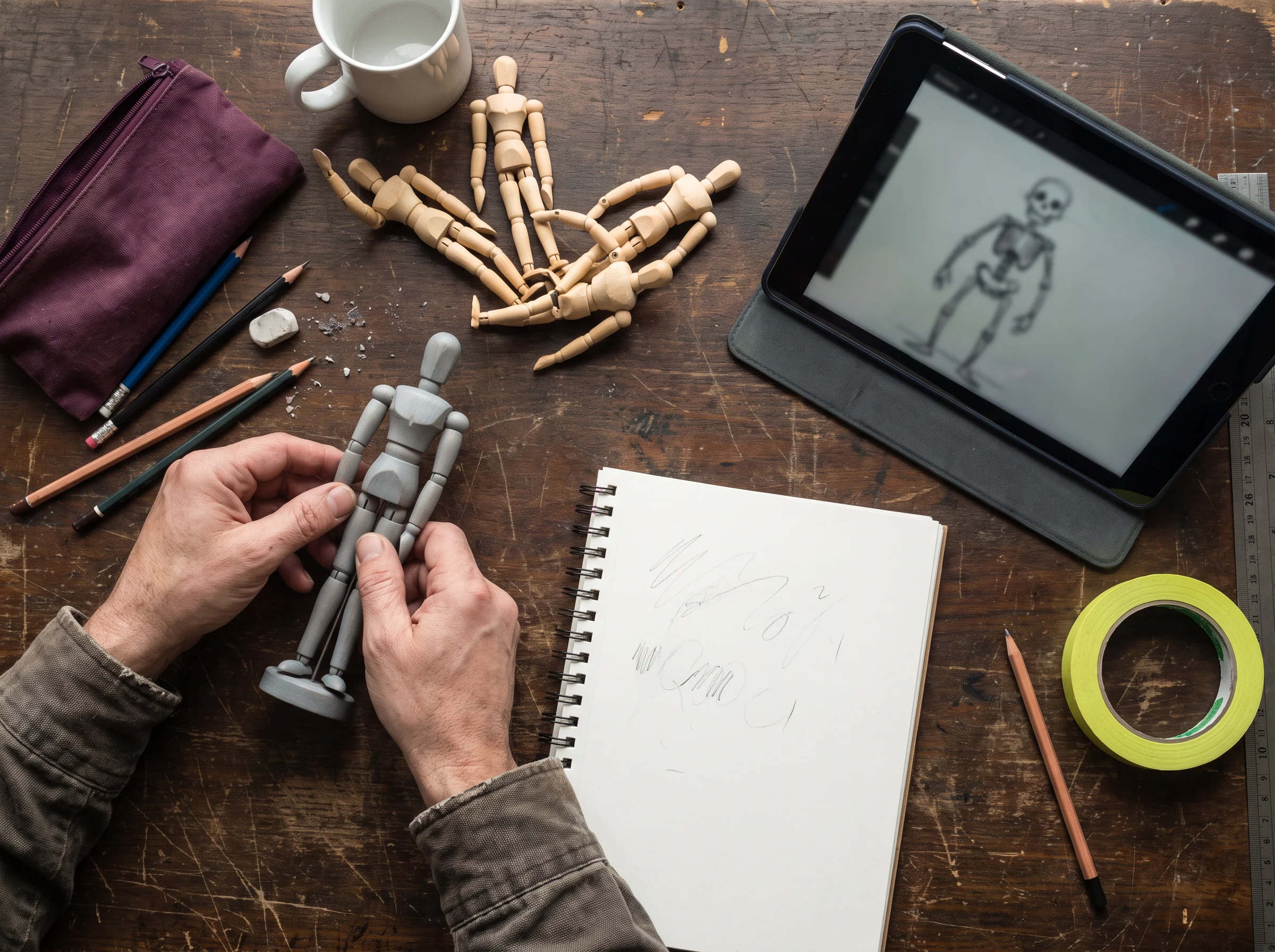
Overhead animator desk with articulated wooden figures and a tablet
Workbench, not showroom
03 — rig hygiene board

Quiet conventions keep expressive work from getting lost.

A / 01

Separate purpose from appearance. A selector can be beautiful; its job still needs a specific, repeatable explanation.

A / 02

Keep the default pose informative. Neutral should reveal orientation, scale, and likely limits without a scavenger hunt.

A / 03

Leave an audit trail. Small changes deserve a concise note: what moved, why it changed, and what needs retesting.

04 — deformation clinic

When a shape breaks, ask the pose a better question.

Deformation is not a beauty pass on top of a rig. It is the negotiated result of volume, compression, twist, contact, and the camera’s reading distance.
Observed faultFirst practical question
Pinched bendDoes the joint have enough volume to fold through this angle?
Sliding contactWhich part should convince us that weight has arrived?
Unreadable twistCan the pose tell us where rotation begins and ends?
Stiff recoveryWhat is leading the next change of direction?
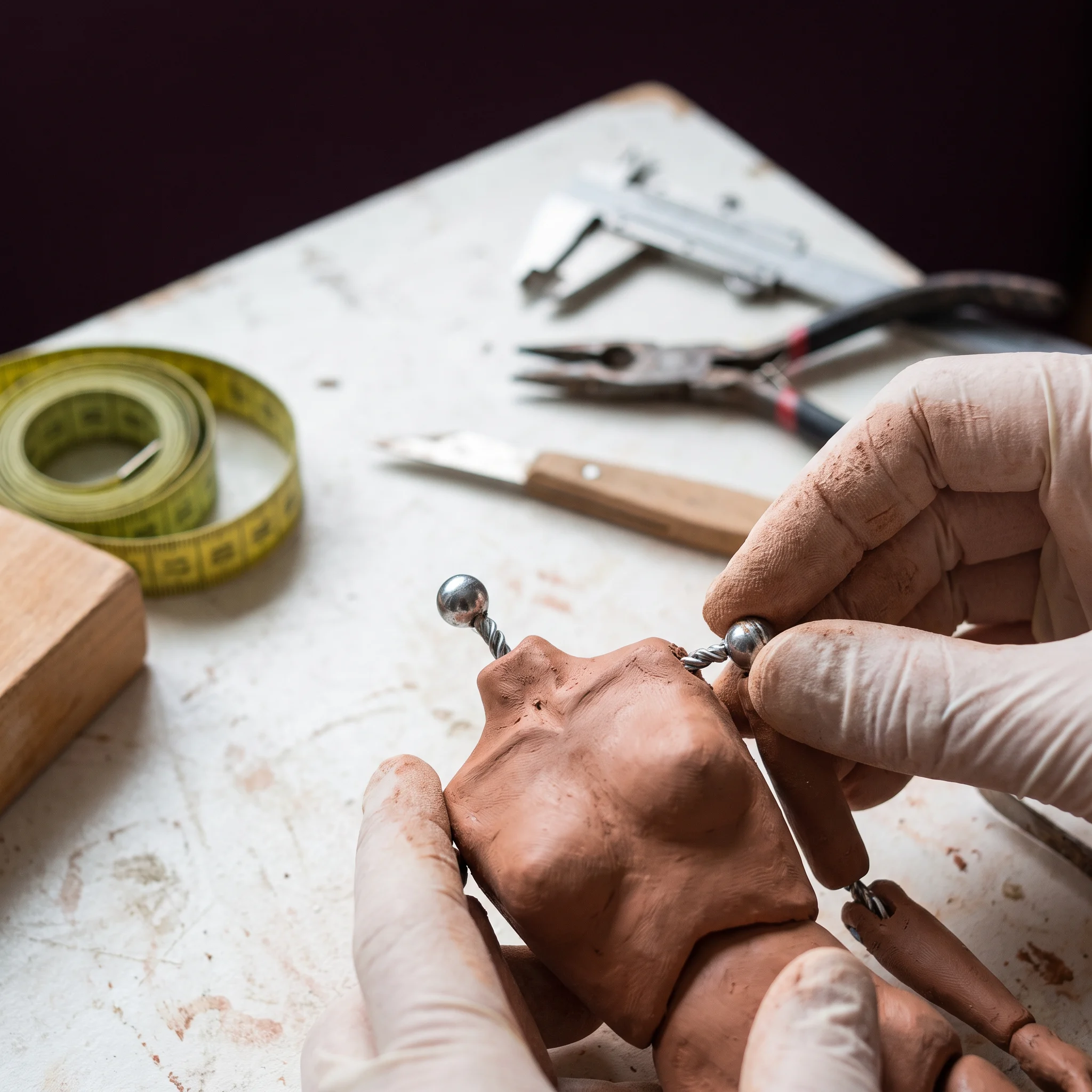
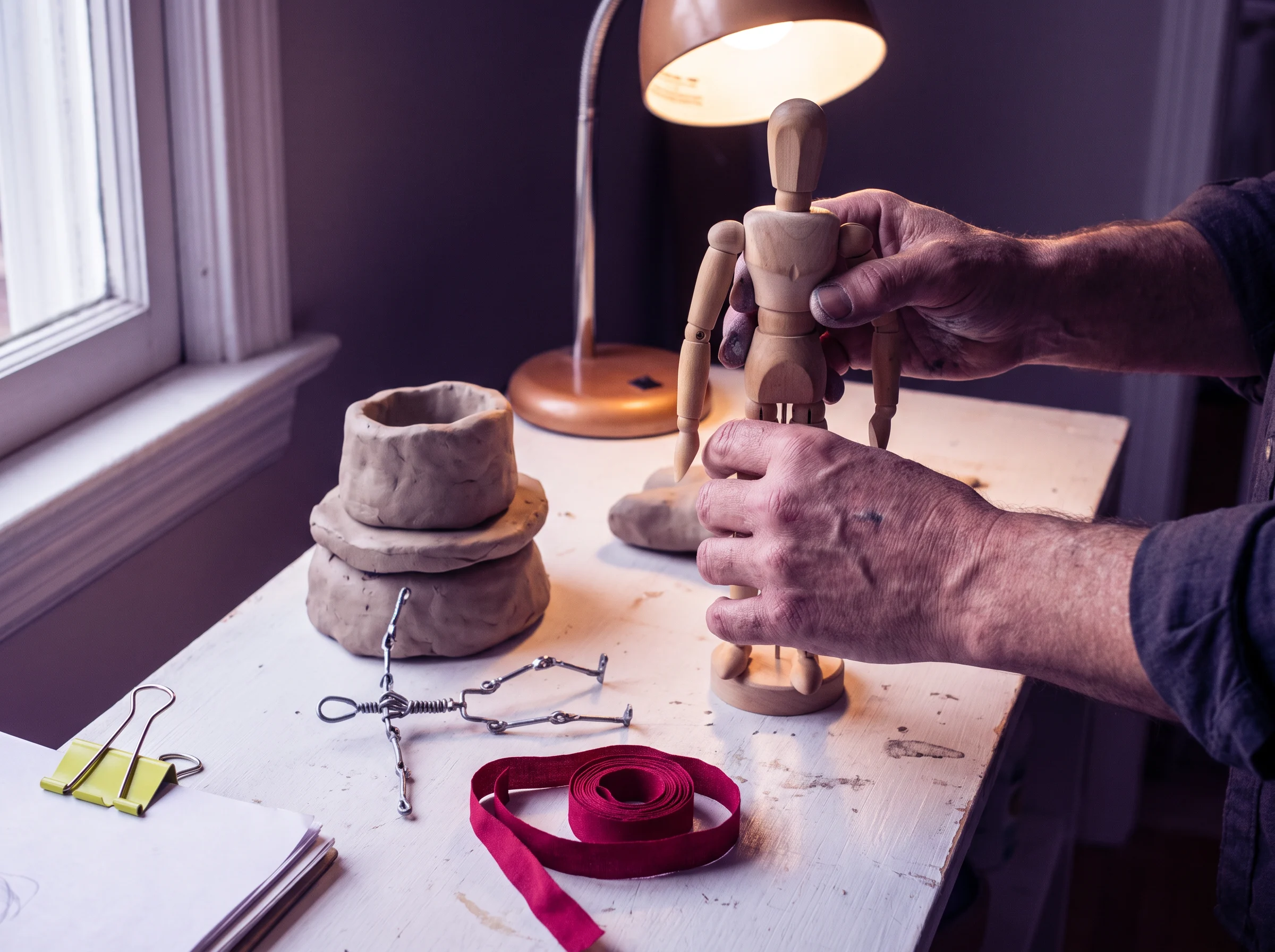
Hands testing a clay puppet shoulder armature joint
05 — control language

Controls should describe their behavior in plain sight.

Choose a tab to unpack one family of controls. There is deliberately no preselected answer: start where your current scene feels most ambiguous.

SignalWhat tells a new animator where to begin?
ResponseWhat changes when the control is pushed?
LimitWhat does the system protect?
RecoveryHow does the pose return to readable neutral?
Hand using a stylus to refine a character gesture drawing
Build controls around an action an animator can recognize.

Space changes are promises.

Make each change of reference explicit. The animator needs to know whether a hand is carrying world momentum, obeying the chest, or following a prop. Test transitions under slow motion and an abrupt direction change.

  • Show the current parent relationship.
  • Keep transition timing predictable.
  • Reset without hiding a meaningful offset.

Weight is an agreement between parts.

Controls for weight work when they preserve the story of contact. Let hips, torso, hands, and feet explain each other. A clean graph is not enough if the body no longer appears to carry itself.

  • Test release and re-contact.
  • Check both planted and travelling poses.
  • Watch the result from the shot camera.

Face controls need an acting vocabulary.

Group controls around choices an animator can name: focus, compression, breath, listening, and reaction. Avoid making the user search across unrelated gestures to build one readable beat.

  • Keep bilateral intent clear.
  • Offer asymmetry without making it obscure.
  • Check the expression at working camera distance.
06 — testing room

Test the rig in the conditions that make it tell the truth.

Select a condition to focus the room.

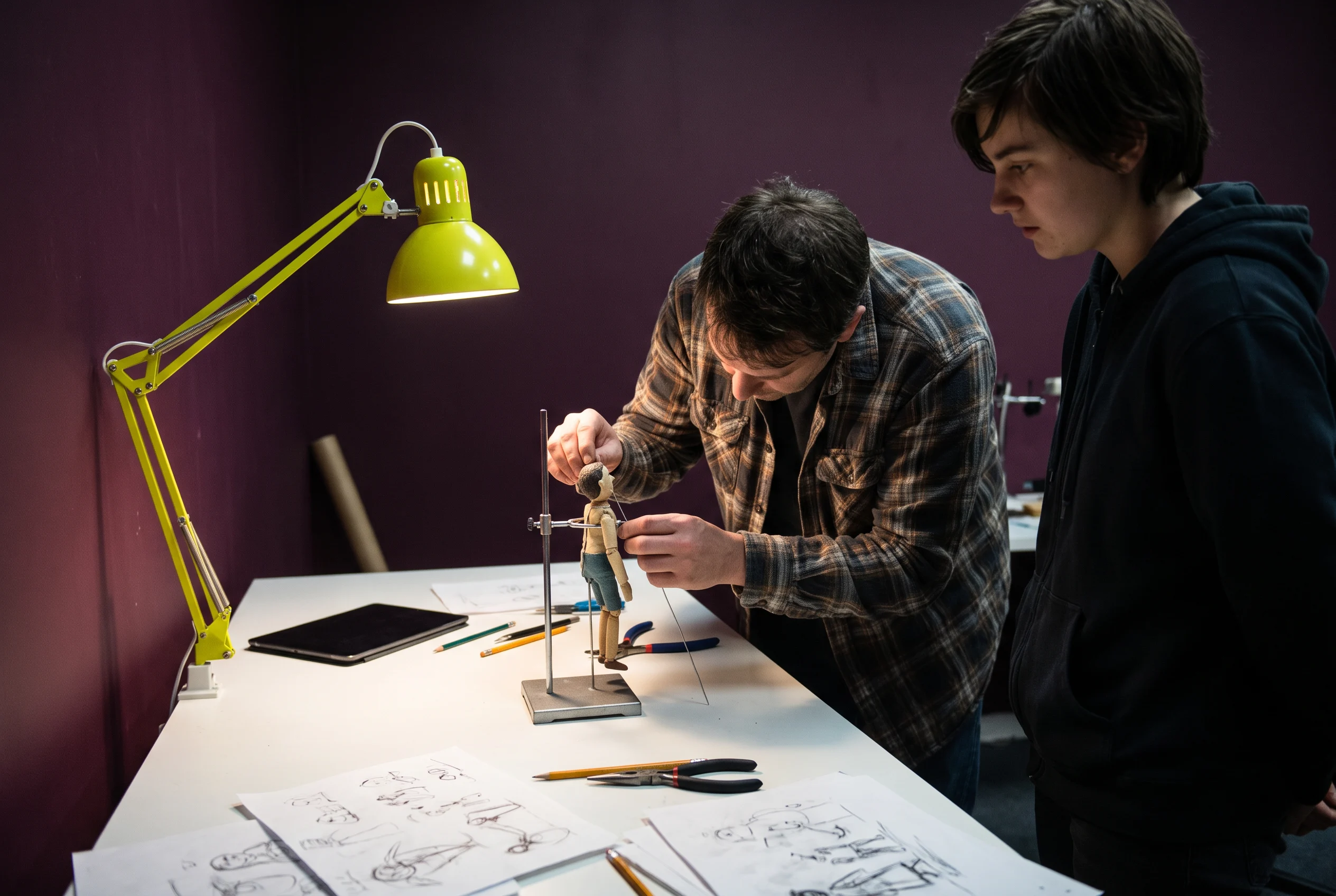
Animator examining a wooden puppet at a side workstationStation 01

Contact

Land, drag, release, and recover. Watch the handoff of weight rather than only the planted frame.
floor / prop / partner
Hands arranging a wooden mannequin and puppet armature objectsStation 02

Twist

Drive offset rotations through a held silhouette. Track volume and the direction of the line of action.
spine / shoulder / wrist
Two animators testing a physical puppet rig at a studio tableStation 03

Distance

Check the same decision in close, medium, and wide framing before you call it a detail.
read / rhythm / intent
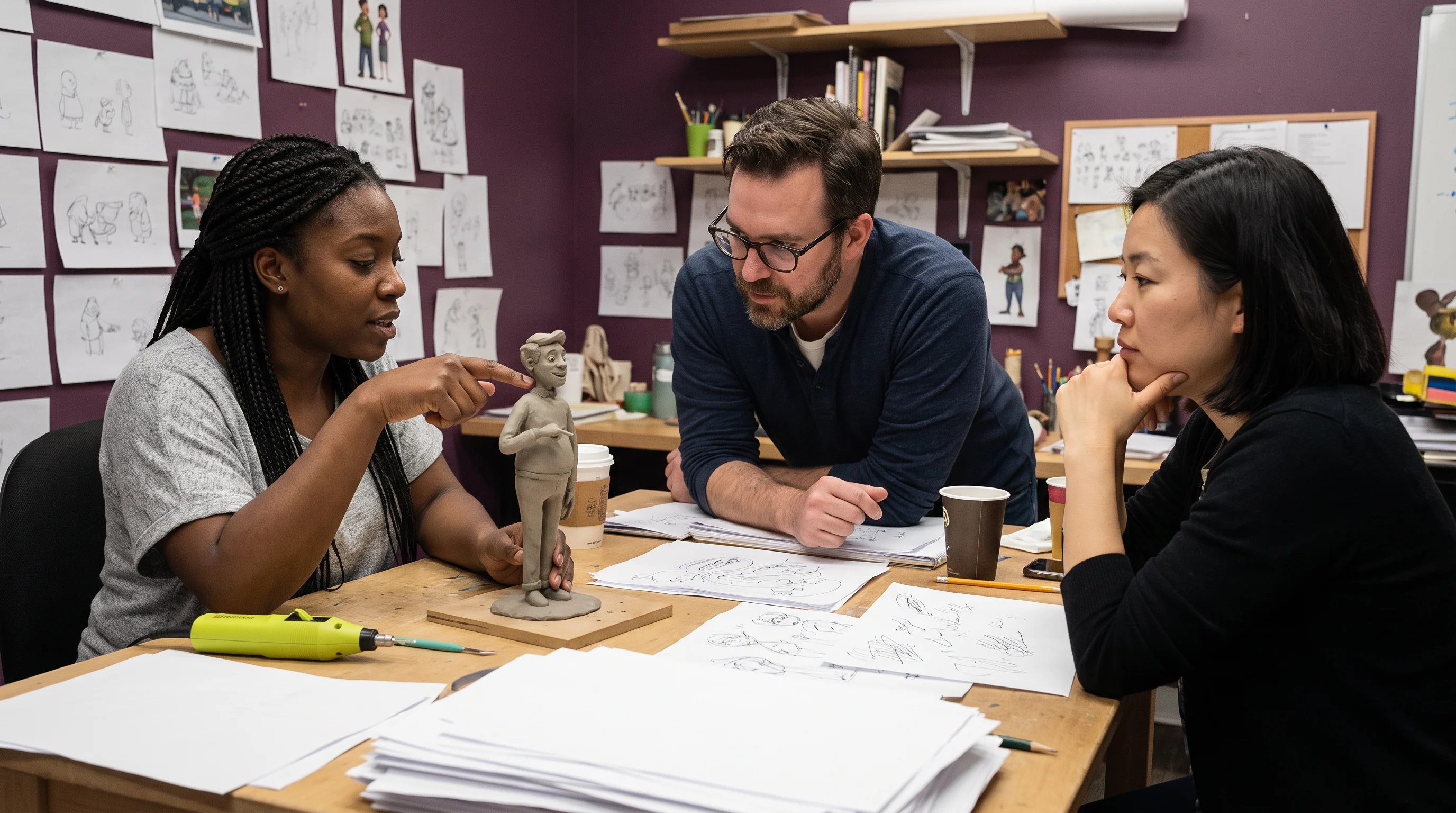
Three animators giving feedback around a character maquette
A note earns its place when someone can test it.
07 — iteration ladder

Move from observation to a specific next pass.

01

State the visible problem

Describe what the viewer can see, without guessing at the fix: “the hand arrives before the shoulder commits.”

02

Offer one testable change

Choose a bounded experiment: alter timing, reshape a control range, revise a parent, or clarify an instruction.

03

Retest the original beat

Return to the shot that exposed the issue. A fix that only works in isolation has not completed the loop.

04

Record the decision

Leave a note that gives future work a starting point rather than an archaeological puzzle.

08 — naming checklist

Make a list your future collaborator can use.

This local checklist stays in your browser. Tick what you have verified, then clear it before a new review. It is a prompt for shared precision, not a score.

0 of 6 checked
09 — pose lab

Use a body to observe a body.

Movement reference does not replace imagination. It supplies evidence: how a balance changes, when a shoulder prepares, what the hands do while a thought lands.
01Play the action.
Notice where your weight changes before you decide where the rig should help.
02Reduce to a silhouette.
Keep only the relationships that still tell the action from a distance.
03Translate, do not trace.
Let the character’s construction and intent reshape the observed motion.
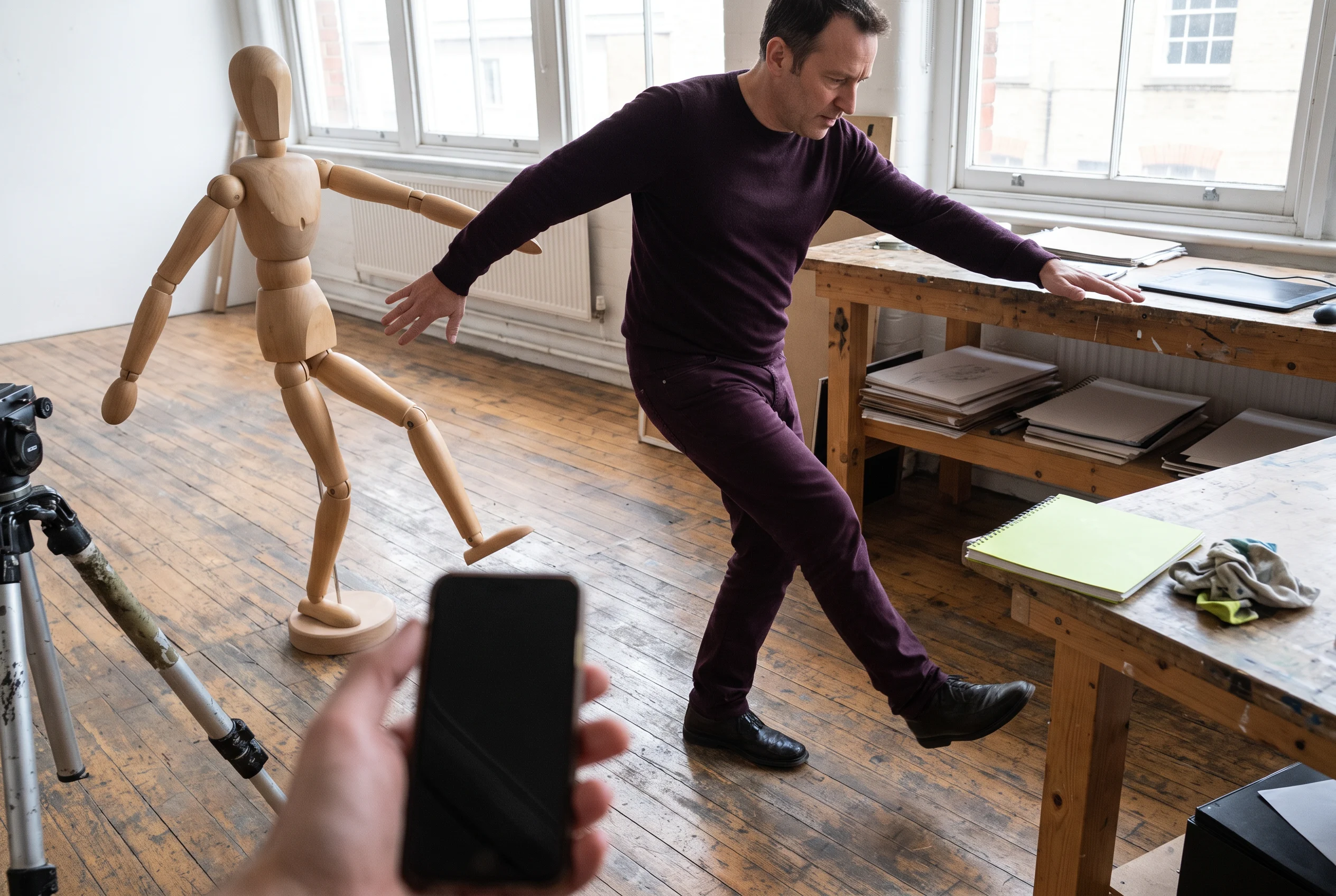
Animator performs a stepping movement beside a wooden mannequin
Reference reveals timing; character choices give timing a reason.
10 — field questions

Questions that keep the workshop moving.

Four recurring questions from the rigging and animation boundary. Open one at a time to keep the page quiet.

Begin with a single intended action and identify the first relationship that prevents it from reading. That may be contact, weight transfer, an unclear control, or a limit that fights the pose. Avoid adjusting every visible setting at once. A narrow observation produces a better test, and a better test gives the next person something concrete to inspect.

Treat the distinction as a working question rather than a verdict. Recreate the issue with a simple, intentional pose and check whether the character can still describe volume, force, and direction. If a broad range of sensible poses fails, examine the system. If one extreme pose fails while simpler versions read, refine the acting choice and then retest the boundary.

A shot can look right and still leave a fragile working file behind. Names explain intent at the moment attention is scarce: during a revision, a handoff, a late camera change, or a return to an old scene. Clear names reduce repeated searching and let a collaborator recognize what should be protected before they make a change to serve the performance.

Useful feedback begins with the screen result, then describes a testable next move. Instead of assigning blame or proposing a broad rebuild, name what the viewer cannot understand and point to the smallest experiment that could clarify it. A note about the hand, shoulder, contact, timing, or control range is easier to assess together and easier to record for the next pass.
11 — contact

Bring a specific shot, question, or workshop note.

Motion Spine is an informational space for discussing the craft of character animation and rigging. Write directly or prepare a draft below.

[email protected]

This form prepares a mail draft only; it does not send automatically.